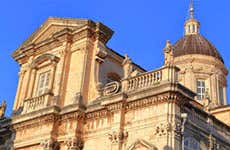
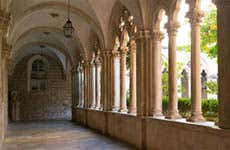
Sponza Palace
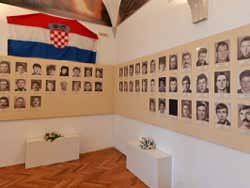
Sponza Palace has witnessed much of Dubrovnik's history and has served the Republic of Ragusa as a bank, armoury, school and customs office. Today, it’s home to a memorial for those fallen during the Croatian War of Independence.
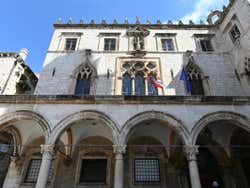
Built in 1521 to house various public figures during the Republic of Ragusa, Sponza Palace has remained intact since the 16th century. The building's facade may remind you of Venetian palaces, and its mix of Gothic and Renaissance elements makes it one of the most iconic buildings in Dubrovnik.
Throughout Dubrovnik's history, Sponza Palace has been used as a school, armoury, bank and customs office. The final one explains why the city's inhabitants still refer to the palace as Divona.
Additionally, Sponza Palace was the meeting point for merchants and businessmen during its commercial splendour as Ragusa. Over the doorways of the facade, there's a marble sculpture of Saint Blaise, the city's patron saint.
Sponza Palace was one of the few buildings that remained intact after the 1667 earthquake.
Inside Sponza Palace
Today, Sponza Palace is home to Dubrovnik's historic archive. Although you can't visit it, this archive contains more than seven thousand historical documents and files.
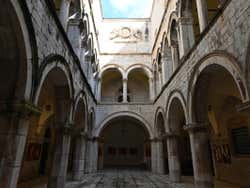
In one of the rooms on the inside patio, you can find the memorial to those fallen in Dubrovnik during the Croatian War of Independence.
Sponza Palace's patio sometimes welcomes temporary exhibitions and is one of the favourite spots for Dubrovnik locals to celebrate weddings, concerts and other events.
Schedule
Monday to Friday from 8:15 am to 3 pm
Saturdays from 8:15 am to 1 pm
Price
Free admission.