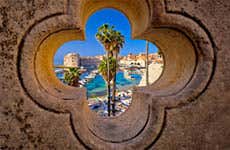
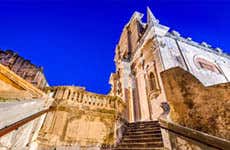
Rector's Palace
Rector's Palace was the most important building in the Republic of Dubrovnik for centuries. Today, it’s home to the History of Dubrovnik Museum and is a must-see in the city.
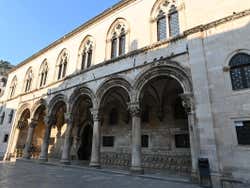
Rector's Palace, located opposite Dubrovnik Cathedral, is a building built in the 14th century that has witnessed lots of Dubrovnik's history. Its architecture, which combines various artistic styles, has hints of Venetian Gothic palaces. It's a must-see in the city.
History
Since its construction in the 13th century, this palace has served as a living quarter of the main branch of government during the Republic of Ragusa, what Dubrovnik was previously known as. Throughout its history, the palace has been used as an armoury, arsenal, courtroom, and prison.
Its most significant role was being the living quarters for the Rector of Dubrovnik for the month during which it was under his charge. At this time, the rector couldn't leave the building except for strictly work reasons. Such was the importance the people of Dubrovnik attached to this office, that on the door of the palace, you can read “obliti privatorum publica curate” (forget the private and take care of the public).
The original building was built in Gothic style, but a gunpowder explosion in 1435 destroyed part of the façade, and it was rebuilt in a more Renaissance style. The 1667 earthquake brought the palace's façade to the ground again. Its new reconstruction incorporated Baroque elements, creating a mixture of styles which makes Rector's Palace a unique building in Dubrovnik.
Inside the Palace
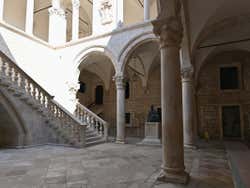
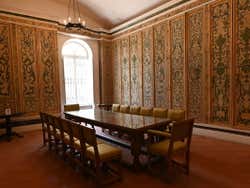
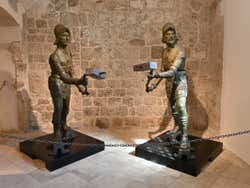
When Napoleon's troops abolished the Republic of Ragusa, Rector's Palace took on other functions and today houses the Museum of the History of Dubrovnik. The palace's main courtyard is dominated by the sculpture of the sailor Miho Pracat, and in front of it is the entrance to the prison cells. Next to the dungeons, you can find the government room where the rector used to meet with important diplomats who could hear the piercing cries of the prisoners.
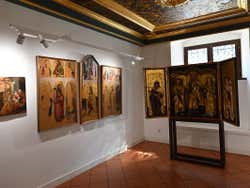
On the upper floor, you'll find numerous portraits and religious paintings from the 13th century, signed by artists of the Dubrovnik School. You can also see a collection of antique furniture that decorated what was once the most significant building in Dubrovnik.
Schedule
From April 1st to October 31st:
Every day from 9 am to 6 pm
From November 1st to March 31st:
Tuesday to Sunday: from 9 am to 4 pm
Price
Adults: € 15 (US$ 16.73)
Students and children: € 8 (US$ 8.92)
Families: € 35 (US$ 39.05)