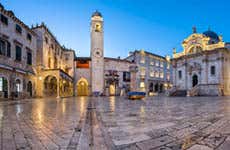
Big Onofrio's Fountain
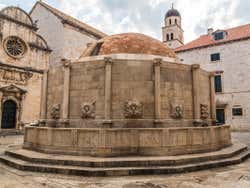
Since its construction in the 15th century, Big Onofrio's Fountain in Dubrovnik has provided the city with drinkable water and is a central meeting point in the Croatian capital.
In the middle of the 15th century, the Republic of Ragusa had an economic surge and was one of the main commercial ports in the Mediterranean. However, the city didn't have a drinking water system. In 1438, the Italian architect Onofrio della Cava, born in Naples, was charged with bringing water to the streets of Dubrovnik.
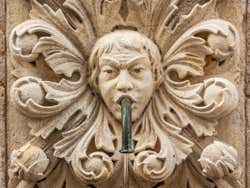
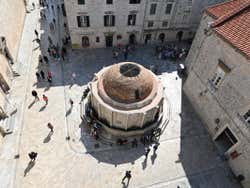
Onofrio designed an aqueduct that connected the nearby Dubrovacka River with the centre of the walled city. This allowed water to flow into the large 16-sided polygonal fountain with ease. One of Onofrio's most brilliant strokes of genius was to decorate each facade with different sculptural motifs where the water came out.
The Neapolitan architect left another monument in Dubrovnik, a small fountain outside Rector's Palace. Since then, the main fountain is known as Big Onofrio's Fountain.
Destruction of the Fountain
After the 1667 earthquake, which marked a before and after in Dubrovnik's history, Big Onofrio's Fountain had to be totally rebuilt. Only its signature sculptural motifs were preserved, which are still the original ones.
Several centuries later, during the bombardments of Croatia's War of Independence, Onofrio's Fountain was damaged again. Today, only one of the sixteen sculptures that originally decorated the fountain remains.
Present Day
Today, Big Onofrio's Fountain is the main meeting point in Dubrovnik. What's more, the fountain's water is potable, so you can fill up your bottles and hydrate in the summer.
From the Walls of Dubrovnik, you can admire the size of the fountain and the oculus that decorates the brick dome.