Dubrovnik City Gates
The walled city of Dubrovnik has two main gates granting access to the city that have remained almost intact since their construction in the 16th and 17th centuries: Pile Gate and Ploče Gate. Learn about their long and rich history.
When the Republic of Ragusa gained independence from the Kingdom of Venice, the construction of the walls to protect the city became essential. Between the 15th and 17th centuries, the Walls of Dubrovnik were built, with two gates to connect the walled city with the outside: Pile and Ploče.
Each night, the city gates were closed so that no one could enter or leave, and the key was given to the rector of Ragusa. Today, the walled city has 4 gates, one on each side of the walls.
Pile Gate
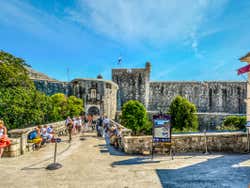
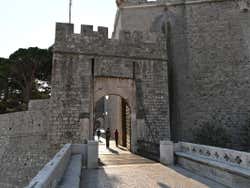
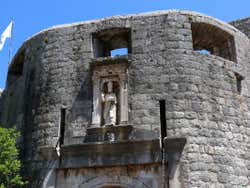
Pile Gate is the main entrance to the walled city of Dubrovnik. Built in 1537 on the western side of the wallsperimeter, Pile Gate was the only entryway for many years during the Republic of Ragusa. The draw bridge from the door would be closed each night for the city's protection.
Today, Pile Gate is a small tower that connects two bridges over the ancient wall's trench, which is now a kid's park. In the upper part of the gate, you can find Saint Blaise's statue, patron saint of Dubrovnik, who welcomes visitors by holding up a model of the city.
Pile Gate leads to a second interior gate, built to avoid possible attacks on the city. Between the two gates, there's a map of Dubrovnik and a map with the damage the city suffered during the Croatian War of Independence.
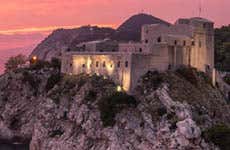
Nowadays, Pile Gate is the main stop for cab ranks and city buses and has stunning views of Fort Lovrijenac.
Ploče Gate
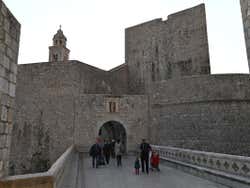
Nearly 80 years after the construction of Pile Gate, a second gate was built: Ploče Gate. It's protected by Revelin Fort and also houses a stone statue of Saint Blaise, the city's patron saint.
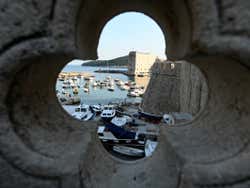
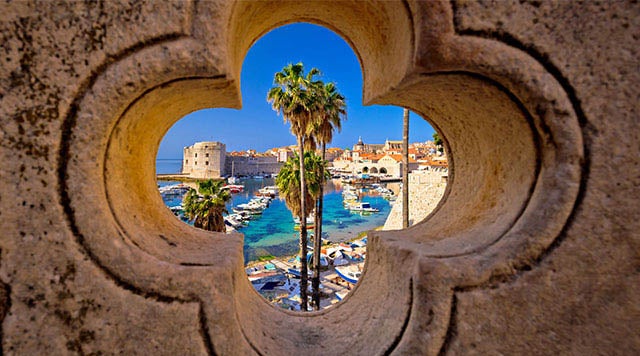
The old draw bridge to the gate was later replaced with the stone gate we see in present today. From here, you'll have impressive views of Dubrovnik Old Port.