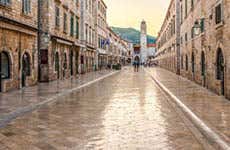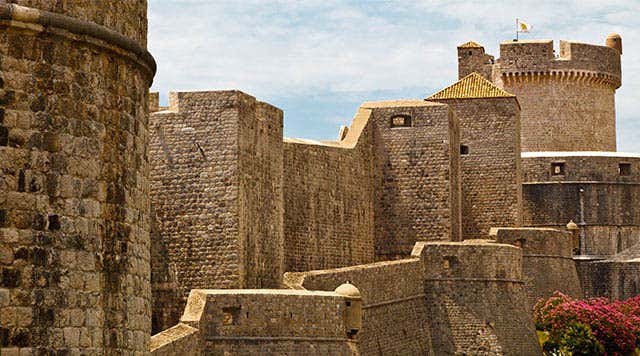
Walls of Dubrovnik
The Walls of Dubrovnik are a symbol of the city and the legacy of the Republic of Ragusa. Their construction in the 15th century marked both a beginning and an end in Dubrovnik's rich history.
The undisputed symbol of Dubrovnik is its impressive 2-kilometer (1.6-mile) city walls, which have proudly safeguarded the city since the 13th century. While fortifications already existed along the Adriatic coast as early as the 7th century, it wasn't until several centuries later that these formidable walls were expanded and raised to a height of 25 meters (82 feet) to defend Dubrovnik against foreign invasions.
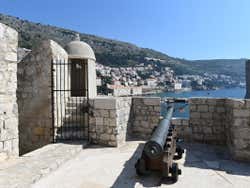
During the Republic of Ragusa, the rivalry of this growing nation with other powers in the Mediterranean meant that it was necessary to further enhance the city's protection. Between the 14th and 15th centuries, the walls were completed, with 16 bastions, a great trench, 4 fortresses and 120 canons.
It's the only city in the world that has preserved walls of this magnitude in such a perfect state. Therefore, UNESCO declared the walls and the historic centre of Dubrovnik a World Heritage Site in 1970.
A Symbol of Resistance
The Pearl of the Adriatic owes its name, in part, to the white stone walls that surround the city and that historically protected it against attacks from the Venetians, Byzantines and Austro-Hungarians. These walls are a symbol of resistance and desire for freedom that has marked Dubrovnik's history. No army was able to penetrate the walls until the arrival of Napoleon.
Although they had to be repaired on several occasions, Dubrovnik's city walls have successfully kept the city safe, making it impenetrable. The last attack was during the Croatian War of Independence in 1991. Serbian and Montenegrin troops sieged and attacked the historic city, although the walls remained intact.
Explore the Walls
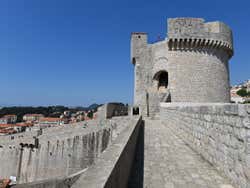
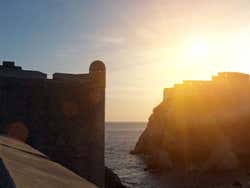
Visiting the Walls of Dubrovnik is the best way to appreciate their magnitude and see up close the four great fortresses: Revelin (next to Ploče Gate), Saint John (the oldest, next to the Old Gate), Minčeta (the highest point of the walls) and Bokar (opposite Fort Lovrijenac).
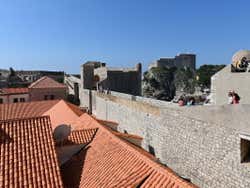
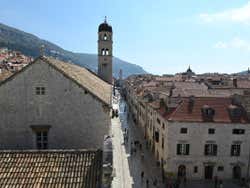
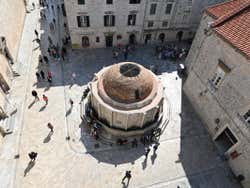
As you explore the Walls of Dubrovnik, you'll have the best views of the main monuments in the city: Stradun, Fort Lovrijenac, the Dominican Monastery, Onofrio's Fountain and Luža Square.
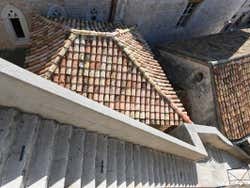
It's also interesting to see the differences between the old roofs, those that survived the 1991 attacks, and the newer ones, which were rebuilt after the war.
A Must-See in Dubrovnik
While visiting the Walls of Dubrovnik can be on the pricier side, it's worth saving two hours of your trip to visit this medieval gem that has become a symbol of the city. Our recommendation is that you visit the walls on your first day to get a unique perspective of the city and to admire all the most important monuments from above.
The best views of the walls can be seen from Dubrovnik's cable car.
Other Tips
With your ticket to the Walls of Dubrovnik, you'll also have access to Fort Lovrijenac which you can visit up to 3 days after your initial ticket purchase.
Schedule
The Walls of Dubrovnik are open from 8 am to 5 pm, extending to 7:30 pm during peak season.
Price
Adults: € 40 (US$ 44.87)
Children under 18: € 15 (US$ 16.82)
Children under 7: free admission.
This ticket is also valid for the Fort Lovrijenac