Split
Check out all the things to do in Split, from Diocletian's Palace to the Temple of Jupiter and the smallest cathedral in the world. Don't miss out on one of the most visited cities in Croatia, a city with Roman roots.
Split is the second-largest city in Croatia and one of the most popular tourist destinations in the country. With around 200,000 inhabitants, Split is the authentic centre of Dalmatia and an essential stop for cruises sailing around the Adriatic.
History
The origins of Split can be traced back to the 2nd century BC, to the first settlements established by the Greek colony of Aspalathos. A pivotal moment in Split's history was the arrival of Roman emperor Diocletian in 305 AD, where it became the newly named Roman city of Salona.
After nearly 300 years of prosperity, Salona was pillaged by the Slavs and Byzantines. During the Middle Ages, Split enjoyed independence, despite being continually involved in disputes between the kingdoms of Venice and Hungary. Finally, the Venetians conquered Split in 1420, although, it retained a certain level of autonomy.
The Dalmatian city belonged to the kingdom of Venice until the arrival of French troops. In 1805, Napoleon's army entered the city and remained there for 7 years. Their successor was the Austro-Hungarian Empire, which controlled Split for almost a century until it became part of Croatia, and as a result, the Republic of Yugoslavia.
Things to Do in Split
Split is an urban hub that combines features of modern Croatia with priceless historic monuments.
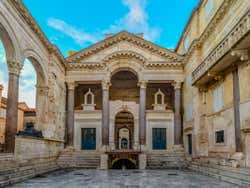
Diocletian's Palace
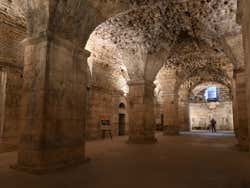
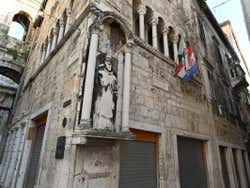
This great palace, built by the Roman emperor, is a symbol of Split and has been declared a World Heritage Site by UNESCO. It's not only the Diocletian's former residence but also features temples, arches, underground galleries and two enigmatic sphinxes.
Cathedral of St. Duje
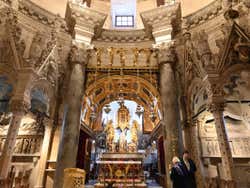
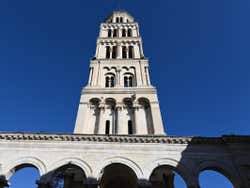
This is one of the oldest and smallest cathedrals in the world. It was conceived by the Roman emperor Diocletian as his personal mausoleum, but as of today it has lost its pagan origin. Now it's a cathedral with an altar, organ, several manuscripts and the tombs of two martyrs.
Temple of Jupiter
This small temple, built to worship the Father of All Gods, has maintained its interior architecture in perfect condition since its construction in the 3rd century A.D.
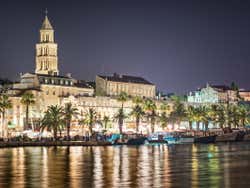
Split Harbour
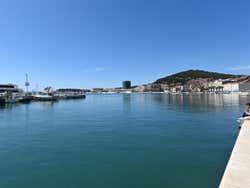
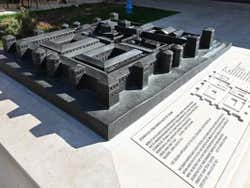
This is without a doubt the liveliest area in the city, especially at night. Here you'll find many terraces, and restaurants and an entirely pedestrianised area. There's also a scale model of the city and another of what Diocletian's Palace might have looked like back in the day.
Gregory of Nin Statue
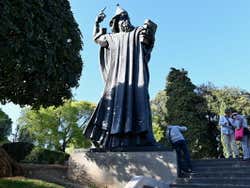
This sculpture represents a Croatian bishop from the 10th century, who tried to impose Croatian as the official language of the church. According to legend, whoever touches the big toe of one of his feet can make a wish that will come true.
How to Get to Split
The city of Split is found in the north of the Dalmatian region, around 230 kilometres (142 miles) from Dubrovnik. There are plenty of options available to arrive in Split from Dubrovnik:
- If you're thinking of renting a car, the drive to Split is about 4 hours. Keep in mind that the drive is along regular roads but you'll have to cross the border with Bosnia and Herzegovina, where you'll have to show your ID or passport. We recommend leaving early to avoid traffic jams, which are common in the high season.
- Another option is to take the bus from Dubrovnik to Split. The journey takes around 4.5 hours and you'll also have to show your ID or passport at the border with Bosnia and Herzegovina. This is an ideal and cheap option, but be sure to look for companies that make a direct journey, without stopping in other cities.
- You can also take a boat from Dubrovnik to Split. These boats only operate from May to October, but it's one of the most enjoyable ways of getting there. The journey is faster than the bus and takes around 3 hours, costing around € 50 (US$ 56.09).
Tour Split
The best way to follow in the footsteps of the different civilisations that have populated Split in the past is to take a free tour. See the most charming corners of the coastal city.